
Selank
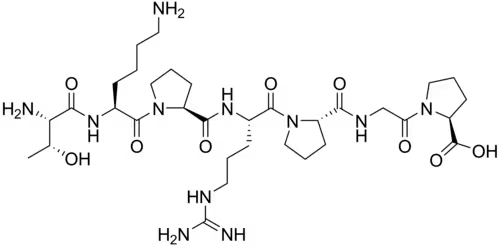
Selank is a synthetic heptapeptide consisting of seven amino acids (Thr-Lys-Pro-Arg-Pro-Gly-Pro) derived from the naturally occurring immunoregulatory peptide tuftsin. Originally developed at the Institute of Molecular Genetics of the Russian Academy of Sciences in cooperation with the V.V. Zakusov Research Institute of Pharmacology, Selank represents a metabolically stable analog of the tuftsin tetrapeptide (Thr-Lys-Pro-Arg) found in human immunoglobulin G heavy chains.
This peptide has gained considerable attention in neuropsychopharmacology due to its demonstrated anxiolytic and nootropic effects in both preclinical and clinical studies, particularly in anxiety management, cognitive enhancement, and mood regulation. Selank exhibits remarkable stability compared to its endogenous counterpart and maintains bioactivity through modulation of GABAergic, dopaminergic, and serotonergic neurotransmitter systems, making it unique among therapeutic peptides.

Overview
Selank demonstrates no sequence homology with other known anxiolytic compounds, contributing to its unique therapeutic profile. The peptide is metabolized rapidly in the liver and eliminated through renal excretion, with complete clearance from circulation within 10 minutes post-administration using sensitive detection methods.

Chemical structure & Properties
- Molecular Formula: C33H57N11O9
- Molecular Weight: 751.86 g/mol
- Sequence: Thr-Lys-Pro-Arg-Pro-Gly-Pro (TKPRPGP)
- Half-life: Approximately 2-3 minutes in circulation (rapid hepatic metabolism)
- Stability: Enhanced metabolic stability compared to tuftsin due to C-terminal extension
Mechanism of Action
Selank exerts its therapeutic effects through multiple interconnected molecular pathways:
Areas Investigated in
the Research Literature

Current Clinical Evidence
Safety Profile and Considerations
Regulatory Status and Legal Considerations
Regulatory information current as of 28 August 2026. This is a summary, not legal or medical advice, and status can change.
FDA Status
- Classification: Not approved for human therapeutic use
- Category: Previously nominated to Category 2. Listed as Nominated but Withdrawn from Category 2 as of April 22, 2026. Not approved for therapeutic use in the US.
- Compounding: Removal from Category 2 on 22 April 2026 does not by itself authorize compounding. Selank is not on the FDA's 503A bulk drug substances list.
- Research Use: Available as research chemical only
International Status
- Russia: Approved for treatment of generalized anxiety disorder
- CIS Countries: Limited approval for anxiety disorders
- European Union: Not approved for therapeutic use
- Other Countries: Generally classified as research chemical
WADA Status
- Classification: Not specifically listed on the Prohibited List (2025)
- Athletic Use: Regulatory status may change; caution advised
- Testing: Detection methods available for anti-doping purposes
Legal Availability
- Commercial Status: Not legally available as prescription medication in most countries
- Market Presence: Sold as research chemicals or investigational compounds
- Quality Control: No regulatory oversight for purity or potency in research markets
- Clinical Use: Limited to research settings and experimental protocols

Conclusion
What the evidence supports
Selank is a synthetic analog of the tuftsin peptide studied for anxiolytic and nootropic effects, primarily in Russian clinical research and preclinical models. That literature has not been replicated in independent controlled trials, and there is no standardized dosing or long-term safety data outside those settings. Selank is not FDA approved in the United States and is not on the FDA's 503A bulk drug substances list, so no lawful compounding pathway currently exists. This page summarizes the published research and nothing further.
Selank Scientific
DATA SUMMARY
About this library
This library is published for education. It summarizes published research on compounds studied in this field. Many have no approved medical use, and several cannot lawfully be compounded in the United States. The presence of a page here does not mean Paragon offers that compound. Nothing on these pages is an offer to treat.
This page is general education about a compound studied in this field. Nothing here is medical advice, a recommendation, or an offer to prescribe or supply. A page appearing in this library does not mean Paragon Sports Medicine offers that compound.
Disclaimer: This information is provided for educational purposes only and does not constitute medical advice. Selank is not approved by the FDA for human therapeutic use. Patients should consult with qualified healthcare providers before considering any peptide therapy.
Statements on this page have not been evaluated by the FDA and are not intended to diagnose, treat, cure, or prevent any disease. Many peptides described here are not FDA approved for the uses discussed, and some cannot lawfully be compounded in the United States. Nothing on this page is medical advice or a recommendation for any individual. Whether any therapy is appropriate depends on your history, your laboratory results, and a clinical evaluation. Individual results vary. This page is published for education. Use of this site does not create a physician-patient relationship.